
 HOME >
 - Advanced Depression Treatment ...
Advanced Treatment Options for Depression & Mood Disorders
Assess Your Well-Being Today
Evaluate your emotional wellness with One Behavioral's PHQ-9 form.

Search for a psychiatrist and therapist that take your insurance.
Empathy + Authority
If you’ve tried medication, therapy, or both — and still don’t feel like yourself — you are not alone.
Depression, anxiety, and other mood disorders can be complex. For some individuals, traditional treatments may not provide enough relief. At One Behavioral, we offer advanced, research-backed treatment options designed to support healing in new and innovative ways. Our team carefully evaluates each patient to determine whether Transcranial Magnetic Stimulation (TMS) or Spravato Therapy may be appropriate for your unique needs. You deserve options. You deserve answers. And most importantly, you deserve hope.
Transcranial Magnetic Stimulation (TMS)
A Non-Invasive, Medication-Free Approach
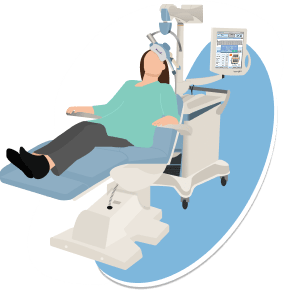
TMS is an FDA-cleared treatment for depression that uses gentle magnetic pulses to stimulate areas of the brain involved in mood regulation. Unlike medication, TMS works directly on targeted brain regions and does not circulate through your body.
What to Expect:
- Treatment sessions typically last 20–40 minutes
- You remain awake and alert
- No anesthesia required
- Minimal systemic side effects
- Series of treatments over several weeks
TMS May Help If You:
- Have major depressive disorder
- Have not responded fully to antidepressants
- Prefer a non-medication option
- Experience medication side effects
Ketamine Therapy
A Rapid-Acting Option for Treatment Depression
Ketamine therapy is increasingly used for individuals with treatment-resistant depression and certain mood disorders. It works differently than traditional antidepressants and may provide relief more quickly in some patients. All treatments are administered in a controlled clinical environment under professional supervision.
What to Expect:
- Administered in-office
- Closely monitored by trained clinicians
- Short treatment series
- May provide improvement within hours to days
Ketamine May Help If You:
- Have persistent or severe depression
- Have not responded to multiple medications
- Experience significant mood instability
- Need a different therapeutic pathway
Which Treatment Is Right ? for You
Every patient’s brain chemistry and life experience are different. That’s why we begin with a comprehensive evaluation to determine:
- Your diagnosis
- Previous treatment history
- Symptom severity
- Medical history
- Insurance eligibility
Our goal is not just symptom relief — but long-term stability and improved quality of life.

Empower your mind, Elevate your life.

Frequently Asked Questions
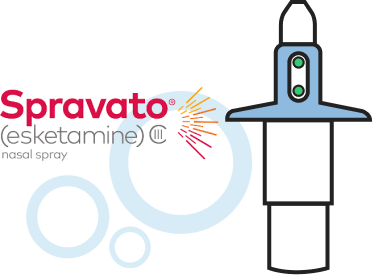
TMS (Transcranial Magnetic Stimulation) and Spravato (esketamine) are both FDA-approved treatments for treatment-resistant depression, but they work differently. TMS uses gentle magnetic pulses to stimulate areas of the brain involved in mood regulation. It is non-medication based and non-invasive. Spravato is a prescription nasal spray administered in-clinic under supervision. It works on the brain’s glutamate system and may provide faster relief for some individuals. Both are evidence-based options for patients who have not improved with traditional antidepressants.
You may be a candidate if:
- You have tried two or more antidepressants without sufficient improvement
- You continue to experience moderate to severe depression
- Medication side effects have been difficult to tolerate
- Your symptoms are significantly impacting daily functioning
A comprehensive psychiatric evaluation is required to determine which option is safest and most appropriate for you.
Choosing between TMS and Spravato depends on your medical history, prior treatment response, symptom severity, and personal preference.
During your consultation, we review:
- Past medication trials
- Current symptoms
- Medical and psychiatric history
- Insurance coverage and practical considerations
Our goal is to recommend the treatment that offers the best balance of effectiveness, safety, and convenience for you.
Results vary for each individual.
Some patients receiving Spravato notice improvement within days to a few weeks.
TMS typically requires consistent sessions over four to six weeks, with many patients noticing improvement during the treatment course.
We monitor progress closely and adjust your treatment plan as needed.
TMS sessions involve sitting comfortably while a magnetic coil delivers tapping pulses to the scalp. You remain awake and can return to normal activities immediately afterward.
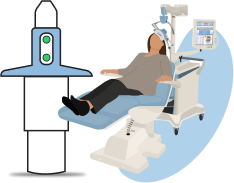
Spravato is administered as a nasal spray in our clinic. You will rest comfortably for about two hours afterward while our team monitors you. You will need someone to drive you home.
Both treatments are performed in a safe, supervised clinical setting.
TMS side effects are typically mild and may include temporary scalp discomfort or headache.
Spravato may cause temporary dizziness, nausea, dissociation, or increased blood pressure during the monitoring period. These effects are usually short-lived and resolve before discharge.
Your safety is our priority, and we carefully review risks before starting treatment.Spravato is administered as a nasal spray in our clinic. You will rest comfortably for about two hours afterward while our team monitors you. You will need someone to drive you home.
Both treatments are performed in a safe, supervised clinical setting.
Most major insurance plans cover TMS and Spravato when medical criteria are met, including documented medication trials.
Our team handles benefit verification and prior authorization to make the process as smooth as possible. We review any out-of-pocket costs before treatment begins.
TMS is typically administered five days per week for about four to six weeks, sometimes followed by taper sessions.
Spravato usually begins with twice-weekly treatments for four weeks, then gradually decreases in frequency based on response.
Your treatment plan is individualized based on clinical progress.
In many cases, yes.
TMS is often performed while patients remain on their current antidepressants.
Spravato is approved for use in combination with an oral antidepressant.
We review all medications to ensure safety and coordination of care.
If you have tried several medications without improvement, you are not out of options.
TMS and Spravato are specifically designed for individuals with treatment-resistant depression and offer alternative approaches that work differently than traditional antidepressants.
A consultation can help determine whether one of these advanced treatments may be appropriate for you.